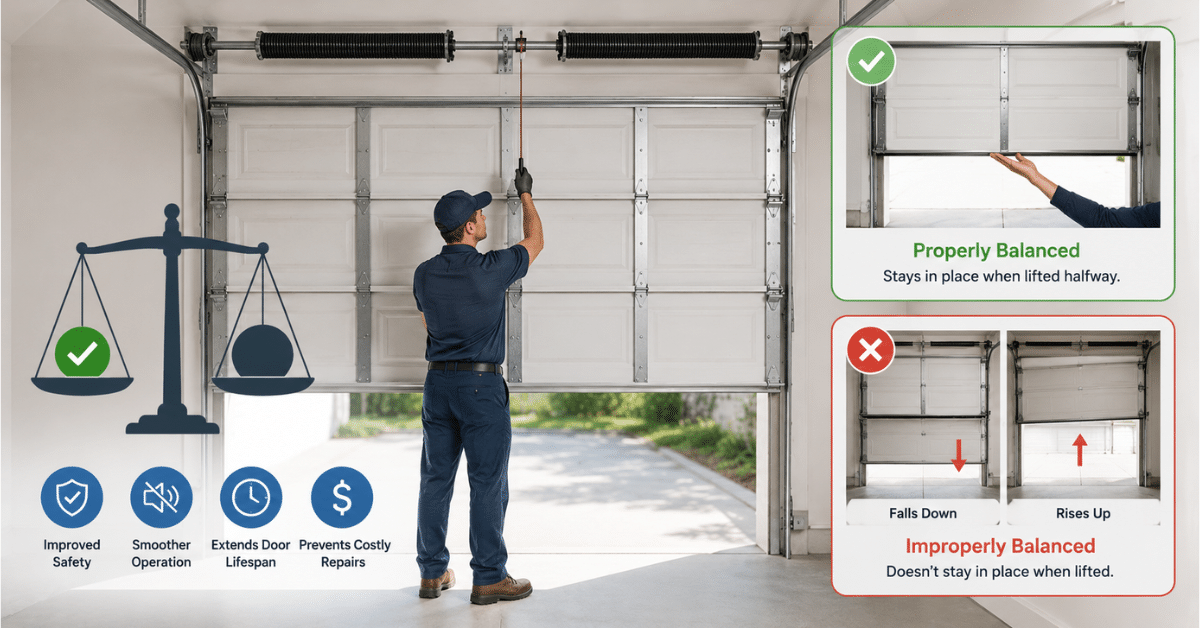
Garage door load balancing is one of the most important — and least understood — concepts in residential garage door maintenance. Most homeowners have never heard the term. Yet an unbalanced garage door is silently responsible for more premature spring failures, burned-out opener motors, and destroyed cables than any other single cause.
The idea is straightforward. Your garage door is a heavy mechanical system — typically 150 to 400 pounds — that moves on a precise counterbalance system designed to distribute that weight evenly across springs, cables, and hardware. When that balance is correct, everything runs smoothly and components last for years. When it drifts off balance, every part of the system compensates — and everything wears out faster.
This guide explains exactly what garage door load balancing means, how to test yours at home, what causes imbalance, and what happens when you ignore it.
What Garage Door Load Balancing Actually Means
Load balancing in a garage door system refers to the relationship between the door’s weight and the counterforce provided by the spring system. A perfectly balanced door has springs tensioned to generate exactly enough upward force to offset the door’s gravitational load across its entire range of motion.
Think of it as a scale. On one side sits the door’s weight — constant, predictable, determined entirely by the door’s size, material, and construction. On the other side sits the spring force — adjustable, set during installation, and subject to change as springs age and lose tension.
When both sides of that scale match, the door operates in a state of equilibrium. The opener motor adds only a small amount of additional force to initiate and maintain movement. The cables carry consistent, even loads on both sides. The rollers glide without lateral pressure. Every component operates within its design parameters.
When the scale tips — when spring force no longer matches door weight precisely — the entire system compensates for the imbalance. The opener works harder. The cables carry uneven loads. Rollers bind against track walls. Every cycle under an imbalanced load accelerates wear across every component simultaneously.
Left-to-Right Balance vs Top-to-Bottom Balance
Garage door load balancing has two distinct dimensions that both require attention.
Left-to-right balance refers to the equal distribution of lifting force between the left and right sides of the door. A door balanced left-to-right rises in a perfectly level horizontal plane — neither side leads or lags. This balance depends on equal cable tension on both sides and correct winding of the cable drums.
Top-to-bottom balance refers to the relationship between spring force and door weight across the full travel range. A door balanced top-to-bottom requires the same effort to hold at any position — fully closed, mid-height, or fully open. This balance depends on correct spring tension calibrated to the door’s exact weight.
Both dimensions must be correct simultaneously for a garage door to operate properly. A door that is perfectly level but requires significantly more force to move at one height than another has a top-to-bottom balance problem. A door that rises and falls evenly throughout its travel but sits tilted at rest has a left-to-right balance problem.
The Simple Balance Test Every Homeowner Can Perform
Testing your garage door’s balance requires no tools, no technical knowledge, and approximately two minutes. Perform this test every six months — more frequently if you notice any changes in how the door sounds or moves.
Step One — Disconnect the Opener
Pull the red emergency release cord hanging from the opener carriage to disconnect the door from the automatic opener. This allows the door to move freely under manual control, powered only by the spring system rather than the motor.
Step Two — Lift the Door to Mid-Height
With the opener disconnected, lift the door manually to approximately mid-height — roughly three to four feet off the ground. Use a smooth, controlled lifting motion. A balanced door should feel relatively light — most of its weight offset by the springs — and should lift without requiring significant effort.
Step Three — Release the Door and Observe
Release the door completely and step back. Watch what happens over the next ten to fifteen seconds.
A properly balanced door stays at mid-height without moving, or drifts very slowly — no more than an inch or two — in either direction before stopping. The spring force and door weight are matched closely enough that neither dominates.
An unbalanced door tells you immediately which way the scale has tipped. A door that drops quickly toward the floor has springs with insufficient tension — the door weight dominates. A door that rises quickly toward the ceiling has springs with excessive tension — the spring force dominates. A door that drifts noticeably to one side or tilts as it moves has a left-to-right imbalance.
Any of these results means your door is not balanced. Do not reconnect the opener and continue using the door as if nothing is wrong. Contact New Braunfels Garage Door Repair for a balance assessment and adjustment.
What Causes Garage Door Load Imbalance
Understanding the causes of imbalance helps you identify when your door is heading toward a problem — and why proper installation matters enormously from day one.
Spring Tension Loss from Age and Fatigue
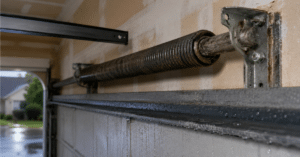
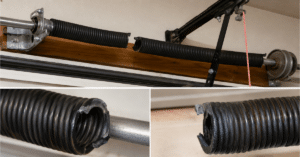
This is the most common cause of load imbalance in residential garage doors. Torsion springs gradually lose tension as they accumulate fatigue cycles over months and years. A spring that was correctly tensioned at installation slowly loses its ability to generate the counterforce that matched the door’s weight.
The loss is not sudden — it creeps in gradually over months. The door gets slightly heavier. The opener works slightly harder. Most homeowners attribute it to the door “just getting older” rather than recognizing it as a measurable load imbalance that is actively damaging the system.
By the time a spring loses enough tension to fail the mid-height balance test, it has typically been delivering increasing stress to the opener motor, cables, and rollers for months.
Unequal Cable Tension Between Sides
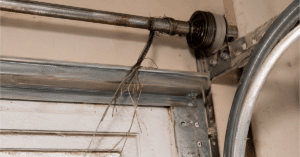
Each side of the door lifts through a separate cable wound onto its own cable drum. If one cable stretches more than the other — from corrosion, age, or manufacturing variation — the two sides develop different effective lengths, creating a left-to-right height difference during operation.
This imbalance places unequal lateral loads on every roller as the door travels. Rollers on the high side push outward against the track wall. Rollers on the low side pull inward. Both experience accelerated wear from the lateral force that a balanced door would never generate.
Incorrect Spring Sizing at Installation
A spring installed with incorrect specifications — wrong wire diameter, coil diameter, or length for the door’s actual weight — creates an imbalance that exists from the very first cycle. This is one of the most consequential installation errors a technician can make.
An undersized spring generates insufficient counterforce, leaving the door permanently heavy. The opener compensates by running at high motor load on every cycle. Cables carry above-rated loads. Rollers experience higher than normal friction. Every component in the system degrades faster — from day one — because the spring never matched the door’s weight correctly.
Added Door Weight After Installation
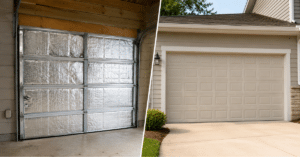
Some imbalance develops after installation because the door itself becomes heavier. Homeowners add insulation panels to an uninsulated door. Weather stripping builds up at the door perimeter. A wood door absorbs moisture over years and gains weight gradually. Steel panels accumulate layers of paint from periodic repainting.
Each weight addition shifts the balance equation. The springs — calibrated for the original door weight — now generate insufficient counterforce for the heavier door. The imbalance grows incrementally until the balance test reveals a door that clearly drops when released at mid-height.
Wayne Dalton Torquemaster System Complications
Wayne Dalton Torquemaster systems use springs enclosed inside the torsion bar rather than exposed torsion springs mounted on the bar exterior. This design makes spring tension assessment more difficult because the spring is not visible during a visual inspection. Torquemaster spring wear and tension loss occurs identically to standard torsion springs but is harder to detect without specialized knowledge.
New Braunfels Garage Door Repair specializes in Wayne Dalton Torquemaster assessment and conversion. If your door uses a Torquemaster system and fails the balance test, professional evaluation is especially important — the enclosed design makes DIY tension adjustment particularly hazardous.
What an Unbalanced Garage Door Does to Every Component
An imbalanced door does not just feel slightly off. It actively damages every part of the system it touches on every single cycle. Understanding the cascade of damage helps explain why balance adjustment is worth prioritizing.
Opener Motor Damage
Your garage door opener is sized for a specific load — the residual force needed to move a properly balanced door. Most residential openers provide 1/2 to 3/4 horsepower, calibrated for a door where the spring system handles the majority of the lifting work.
When the door is heavy from spring tension loss, the opener motor compensates. It runs at higher current draw, generates more heat, and works faster through its duty cycle limits on every single use. A motor that runs at 110% of its rated load for months burns out significantly faster than its rated lifespan. Homeowners who replace openers without diagnosing and correcting the underlying balance issue find the new opener developing the same premature failure within a year or two.
Cable Wear and Premature Failure
An imbalanced door creates unequal tension between the left and right cables. The cable on the lower side carries above-rated load as the door’s tilted weight concentrates on that side. At the same time, the cable on the higher side experiences intermittent slack and re-tension cycling — which causes fatigue at the drum winding point faster than consistent-tension loading would.
Both damage mechanisms accelerate cable degradation simultaneously. A door that operates with even mild left-to-right imbalance for a year may consume two to three years of cable life in that time.
Track and Roller Damage
Rollers are designed to roll through the track with minimal lateral force — just enough to maintain contact with the track wall without binding. A balanced door provides exactly that. An unbalanced door pushes the rollers laterally against the track walls throughout the travel range.
This lateral pressure generates friction heat at the roller-track interface, accelerates roller bearing wear, and progressively deforms the track walls inward or outward depending on the direction of imbalance. The grinding noise that develops in an unbalanced door’s tracks is not a lubrication problem — it is lateral pressure generating friction that lubrication cannot fully address.
Panel Stress and Hardware Fatigue
The door panels themselves experience stress from imbalance. When one side of the door leads the other during travel, the panel sections that bridge between the high side and low side experience a twisting — or racking — force on every cycle. Over time, this racking stress loosens hinge fasteners, fatigues hinge plates, and in severe cases cracks panel sections at the corner hardware attachment points.
Every hardware fastener in the system — hinge bolts, bracket screws, roller stem retainers — experiences greater vibration and shock loading from an unbalanced door than a balanced one. Loose hardware that seems to need constant tightening is often a symptom of underlying imbalance rather than simple vibration from a healthy system.
How Professionals Restore Garage Door Load Balance
Restoring balance is not a homeowner task — it requires adjusting torsion spring tension, which involves the same hazards as spring replacement. However, understanding the process helps you evaluate whether the service you receive addresses the problem completely.
A professional balance restoration begins with measuring the door’s actual current weight. This measurement accounts for any weight changes since installation — added insulation, accumulated weather stripping, moisture absorption — and establishes the correct spring tension target.
The technician then assesses current spring tension against that target. If the gap is within adjustment range, they add or reduce turns on the spring winding to restore correct counterbalance. If the spring has lost tension due to fatigue beyond the adjustment range, or if it is incorrectly sized for the door’s actual weight, replacement with correctly specified springs is the appropriate resolution.
After spring adjustment, the technician verifies left-to-right cable tension balance by checking drum winding and cable length on both sides. The door is cycled multiple times with the technician watching from the front for level travel throughout the full range. The mid-height balance test is performed with the door released at several heights — not just mid-travel — to verify consistent balance across the full range of motion.
Finally, opener force settings are recalibrated for the newly balanced door. A door that was previously heavy required higher opener force settings to compensate. After spring adjustment restores correct balance, those force settings need reduction — otherwise the opener applies excessive force to a now-properly-balanced door, which triggers auto-reverse unexpectedly.
New Braunfels Garage Door Repair: Balance Assessment and Correction
New Braunfels Garage Door Repair performs complete garage door load balancing assessments as part of every maintenance visit and every repair service call. We measure, adjust, verify, and document — so you leave knowing your door is genuinely balanced rather than just feeling better temporarily.
Our balance service includes spring tension assessment, cable tension verification on both sides, hardware tightening, opener force recalibration, and a full travel test before we consider the job complete. If your springs require replacement to restore correct tension, we carry the most common specifications on every service vehicle and complete the replacement the same day.