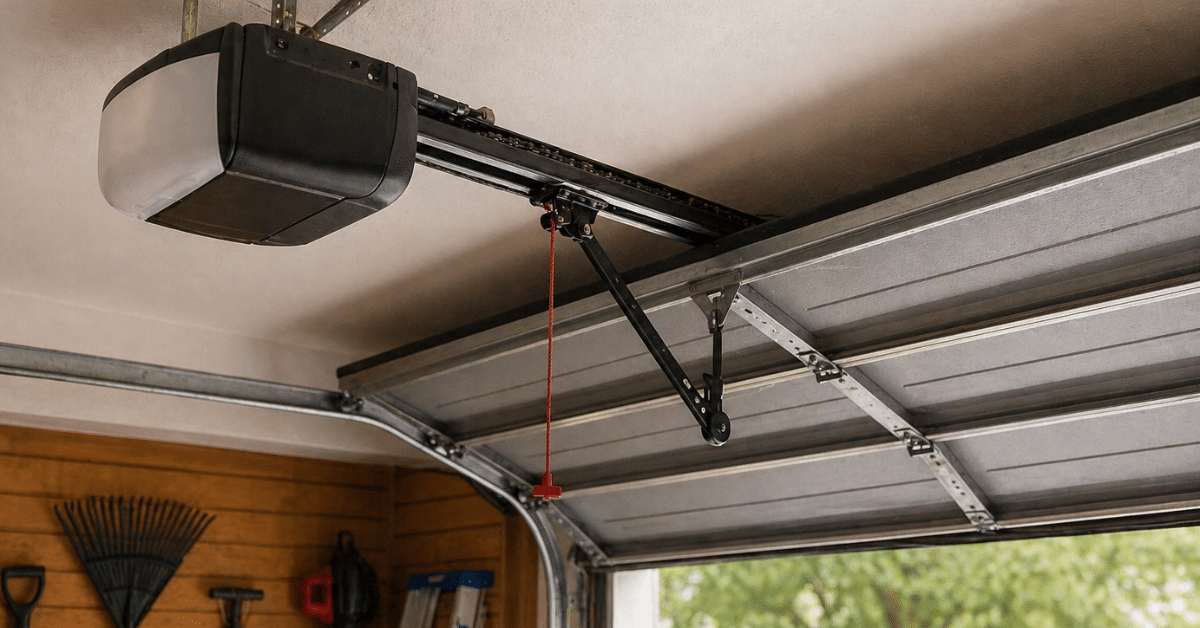
If your garage door opens and then closes immediately, it’s usually your system trying to protect you. Modern garage door openers are designed with safety features that stop and reverse the door if something seems wrong. While that’s a good thing, it can be frustrating when the door won’t stay open. In most cases, the problem is not serious—it’s often caused by sensor issues, incorrect settings, or minor mechanical faults. The important part is not to ignore it, because what starts as a small issue can turn into a bigger and more expensive repair if left unchecked. The good news is that you can often diagnose and fix this problem yourself by following a few simple steps.
Quick Fix Summary
Before diving into details, here’s what you should check first:
- Make sure safety sensors are clean and aligned
- Remove anything blocking the sensor beam
- Check and adjust opener limit settings
- Inspect wiring connections for damage
- Test whether the issue is with the remote or wall button
Why Your Garage Door Opens Then Closes Immediately
Your garage door opener is programmed to reverse the door if it detects a problem. This is a built-in safety mechanism to prevent accidents, damage, or injury. When something interrupts the system—like a blocked sensor, incorrect settings, or faulty wiring—the opener reacts by closing the door immediately after opening.
Understanding the cause is key, because each issue has a different fix.
Why Is My Garage Door Opening Slowly and How to Fix It
1. Misaligned or Dirty Safety Sensors (Most Common Cause)
Safety sensors are located near the bottom of your garage door tracks. They send an invisible beam between each other. If that beam is blocked or misaligned, the opener assumes something is in the way.
How to Recognize This Problem
- The door starts to close and then reverses quickly
- Sensor lights are blinking instead of solid
- The door works when you hold down the wall button
How to Fix It
- Clean both sensor lenses with a soft cloth
- Adjust them so they face each other directly
- Make sure both indicator lights are steady
Even a slight misalignment can cause this issue, so take your time adjusting them.
2. Something Blocking the Door Path
It doesn’t take much to trigger the safety system. A small object or even dirt can interrupt the sensor beam.
What to Check
- Boxes, tools, or storage items near the door
- Leaves, dust, or spider webs
- Any object crossing the sensor line
Solution
Clear the area completely and test the door again. This is one of the quickest fixes and often solves the problem immediately.
3. Incorrect Limit Settings on the Opener
Your garage door opener uses limit settings to control how far the door should open and close. If these settings are off, the door may reverse unexpectedly.
Signs of Limit Issues
- Door closes and then reopens
- Door doesn’t fully open
- Movement seems inconsistent
How to Fix It
Locate the limit adjustment screws on your opener unit. Make small adjustments and test after each change. Avoid turning too much at once.
4. Faulty or Loose Wiring
Wiring connects your sensors and opener. If wires are damaged or loose, signals may not reach the system properly.
Warning Signs
- Sensors don’t light up correctly
- Door behaves randomly
- Intermittent opening and closing
Fix
- Inspect wires for cuts or wear
- Tighten loose connections
- Replace damaged wiring if needed
If you’re unsure, it’s safer to have a professional handle this.
5. Remote Control or Wall Button Issues
Sometimes the issue is not mechanical—it’s the control system.
What Happens
- Remote sends incomplete or faulty signals
- Wall button behaves differently than remote
How to Test
Try operating the door using the wall button instead of the remote. If it works fine, the problem is likely with the remote.
Fix
- Replace remote batteries
- Reprogram the remote
- Reset the opener system
6. Ageing or Malfunctioning Garage Door Opener
If your opener is old, it may struggle to function correctly.
Signs of a Failing Opener
- Delayed or slow response
- Door opens and closes unpredictably
- Unusual noises from the motor
Solution
If multiple issues appear and repairs don’t help, replacing the opener may be the best long-term solution.
Step-by-Step Troubleshooting Guide
Follow these steps in order to quickly identify and fix the issue:
Step 1: Inspect and Clean Sensors
Make sure they are aligned and free from dirt.
Step 2: Clear the Door Path
Remove any objects or debris.
Step 3: Test Using Wall Button
This helps identify if the issue is with the remote or sensors.
Step 4: Adjust Limit Settings
Fine-tune the opener settings carefully.
Step 5: Check Wiring
Look for visible damage or loose connections.
When You Should Call a Professional
Some problems are not safe to handle on your own.
Call a technician if:
- Sensors are working but issue continues
- Wiring is damaged
- The opener motor is failing
- The door behaves unpredictably
Professional help ensures safety and prevents further damage.
How to Prevent This Problem in the Future
Preventive maintenance can save you time and money.
- Clean sensors regularly
- Keep the door path clear
- Inspect parts every few months
- Test the system monthly
A well-maintained garage door is less likely to develop sudden issues.
FAQs
Q: Why does my garage door open then close right away?
A: It’s usually caused by sensor misalignment, blockage, or incorrect settings.
Q: How do I fix misaligned sensors?
A: Adjust them until both lights are solid and facing each other properly.
Q: Why does holding the wall button work?
A: Holding the button bypasses safety sensors, indicating a sensor issue.
Final Thoughts
When your garage door opens then closes immediately, it’s usually a safety feature doing its job—not a major failure. Most of the time, the solution is simple and quick if you know where to look.
Start with the sensors—they are the most common cause. Then move to settings and wiring. Fixing the issue early can save you from bigger repairs and keep your garage door working safely and smoothly.