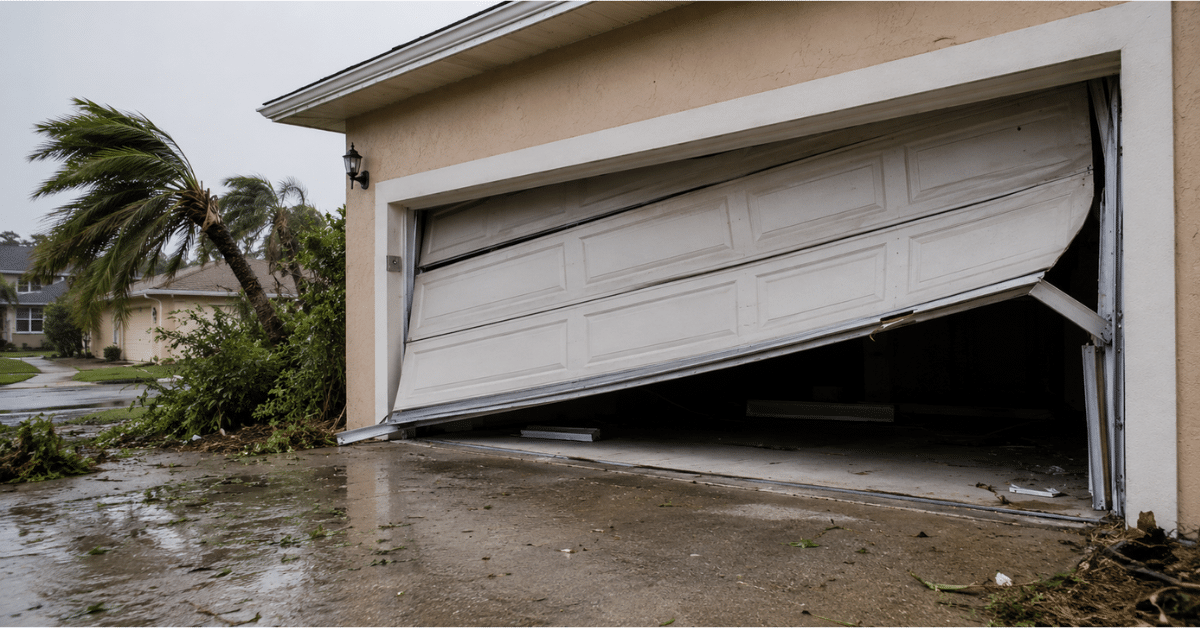
Yes — hurricanes damage garage doors more than almost any other part of your home’s exterior. High winds, flying debris, and pressure changes put enormous stress on garage panels, tracks, and springs during every major storm. Many homeowners discover the hard way that a standard garage door simply cannot survive a Texas hurricane. In this guide, we explain exactly how hurricane damage garage door failures happen, what warning signs to watch for, and how to protect your home before the next storm season arrives.
How Hurricanes Damage Garage Doors
A garage door is the largest moving part on your home — and the most vulnerable surface during a hurricane. Understanding exactly how storms destroy garage doors helps you make smarter decisions about reinforcement and replacement.
Most standard residential garage doors are built to handle winds of 50–70 mph at most. A Category 1 hurricane starts at 74 mph. Texas regularly sees Category 2, 3, and even 4 storms making landfall along the Gulf Coast and pushing destructive winds deep inland.
Wind Pressure and Panel Failure
Hurricane-force winds create intense positive pressure on the outside of your garage door and negative pressure — suction — on the inside simultaneously. This two-directional force bows panels inward and outward at the same time.
Standard single-layer steel panels flex under this pressure and eventually buckle. Once a panel buckles, the entire door loses structural integrity and can collapse inward completely.
Flying Debris Impact
Hurricanes turn everyday objects into high-speed projectiles. Tree branches, fence boards, lawn furniture, and roof shingles travel at lethal speeds during major storms.
A single piece of debris striking your garage door can punch through panels, bend tracks, and disable the opener system entirely. Even minor dents from debris create weak points that fail under continued wind pressure.
The Pressure Differential Danger
Here is what most homeowners do not realize — when a garage door fails during a hurricane, it creates a catastrophic pressure change inside your home. Wind rushes in, pressurizes the interior, and dramatically increases the risk of roof failure.
This is why hurricane damage garage door failures so frequently lead to far greater structural damage beyond the garage itself. Protecting your door protects your entire home.
Warning Signs Your Garage Door Cannot Survive a Hurricane
Not every garage door is equally vulnerable. However, certain signs tell you clearly that your current door will not survive a major Texas storm.
Age and Single-Layer Construction
Any garage door older than 15–20 years almost certainly lacks modern wind resistance ratings. Single-layer steel or aluminum doors offer minimal structural resistance against hurricane-force winds.
Look at your door’s construction. A single flat panel with no insulation layer behind it is a single-layer door — the weakest option available.
Visible Damage and Poor Alignment
Existing dents, bent panels, or tracks that sit slightly out of alignment all signal structural weakness. A door that already struggles under normal conditions will fail almost immediately under hurricane stress.
Also check your door’s bottom seal and side weatherstripping. Gaps along the edges allow wind-driven rain to penetrate and increase pressure differential during storms.
No Wind Load Rating Label
Hurricane-rated garage doors carry a visible wind load rating label, usually located on the inside of the door near the bottom panel. If your door has no such label, it has no certified wind resistance rating.
This alone tells you the door was never designed to handle hurricane damage. Replacement or reinforcement becomes a serious priority.
Hurricane-Rated Garage Doors: What to Look For
Replacing a vulnerable door with a hurricane-rated model is the most effective long-term solution. However, not all hurricane-rated doors are equal — here is what actually matters.
Wind Load Ratings Explained
Hurricane-rated garage doors carry wind load ratings measured in pounds per square foot. For most Texas Gulf Coast and inland storm zones, look for doors rated at a minimum of 130 mph wind resistance.
Homes in coastal areas or high-exposure zones should target doors rated for 150 mph or higher. Check your local building codes — many Texas counties now require specific wind ratings for new garage door installations.
Double-Layer and Triple-Layer Construction
Hurricane-rated doors use double-layer or triple-layer panel construction with steel skins and an insulating core. This layered design provides the structural rigidity needed to resist wind pressure without buckling.
Triple-layer doors also offer significant insulation benefits — a genuine advantage during brutal Texas summers when garage temperatures climb above 130°F.
Reinforced Struts and Hardware
A hurricane-rated door is only as strong as its support system. Horizontal reinforcing struts run across each panel and transfer wind load to the vertical tracks rather than allowing panels to flex.
Heavy-gauge tracks, reinforced hinges, and high-cycle torsion springs complete the system. Never accept a hurricane-rated door without verifying that the full hardware package meets the same wind resistance standard.
How to Reinforce Your Existing Garage Door for Storm Season
Full door replacement is ideal — but not always immediately possible. Fortunately, several reinforcement options significantly improve your current door’s storm resistance without full replacement.
Garage Door Bracing Kits
Retrofit bracing kits install horizontal steel struts across your existing door panels. These kits add meaningful wind resistance to standard doors and cost between $100–$250 depending on door size.
Professional installation ensures the bracing mounts correctly to door stiles and tracks. Improperly installed bracing can actually concentrate stress and worsen panel failure during storms.
Vertical and Horizontal Locking Bars
Heavy-duty locking bars that engage both the track and the floor provide additional resistance against wind-driven panel failure. These work best in combination with bracing struts rather than as standalone solutions.
Always engage your manual lock during a hurricane watch or warning — even if your door has an electric opener. Power outages during storms make manual locks your primary defense.
When to Call a Professional Before Storm Season
At newbraunfelsgarage.com, we conduct pre-storm season garage door inspections across New Braunfels, San Antonio, and the Hill Country region. Our team checks wind ratings, hardware condition, track alignment, and seal integrity — and gives you a clear action plan before hurricane season peaks.
Do not wait until a storm watch is issued. Contractors book out fast when hurricanes threaten, and emergency installations during active weather warnings are rarely possible.
What to Do After Hurricane Damage to Your Garage Door
Even if you prepare thoroughly, a severe storm can still cause hurricane damage to your garage door. Knowing the right steps afterward protects your home and your insurance claim.
Immediate Safety Steps
Do not attempt to operate a visibly damaged garage door — bent tracks, broken springs, and buckled panels make manual or electric operation extremely dangerous. A door that falls off damaged tracks can cause serious injury.
Disconnect the opener and secure the door in the closed position using locking bars or a brace before leaving the area. Cover any panel gaps with heavy-duty plywood to prevent further water intrusion.
Document Everything Before Repairs
Photograph all damage thoroughly before touching anything. Capture every bent panel, broken spring, damaged track, and hardware failure from multiple angles.
This documentation is essential for your homeowner’s insurance claim. Most Texas insurers require detailed photo evidence before approving garage door replacement coverage after storm events.
Contact a Licensed Garage Door Professional Immediately
Hurricane-damaged garage doors need professional assessment before repair or replacement begins. A technician identifies hidden structural damage that photographs alone cannot reveal.
Spring tension systems damaged by storm impact carry serious injury risk if handled incorrectly. Always use a licensed, insured garage door professional for post-hurricane repairs.
FAQ: Hurricane Damage Garage Door
Q1: Can a standard garage door survive a hurricane?
A: Most standard residential doors are rated for 50–70 mph winds at best — well below Category 1 hurricane strength. Without reinforcement or replacement, standard doors routinely fail in major storms.
Q2: How much does a hurricane-rated garage door cost?
A: Hurricane-rated garage doors typically cost between $800–$2,500 installed, depending on size, material, and wind load rating. It is a worthwhile investment compared to full storm damage repair costs.
Q3: Should I open my garage door during a hurricane to equalize pressure?
A: No — this is a dangerous myth. Opening your garage door during a hurricane dramatically increases wind load on your roof structure and greatly raises the risk of catastrophic structural failure.
Q4: Does homeowner’s insurance cover hurricane garage door damage?
A: Most standard Texas homeowner’s policies cover hurricane wind damage to garage doors. Document all damage with photos immediately and contact your insurer before beginning any repairs.
Q5: How do I know if my garage door is hurricane rated?
A: Look for a wind load rating label on the inside of the bottom panel. No label means no certified rating — contact a garage door professional to assess your door’s storm readiness.
Conclusion: Do Not Wait for a Hurricane to Find Out Your Door Will Fail
Hurricane damage to garage doors happens fast — and the consequences ripple through your entire home structure. The good news is that reinforcement and replacement options are affordable, effective, and available right now before storm season peaks. Assess your current door’s wind rating today. If it lacks certification, act before the next storm threatens your area. A hurricane-rated door is not an upgrade — for Texas homeowners, it is a necessity. Contact a licensed garage door professional this week and get your home storm-ready before it is too late.