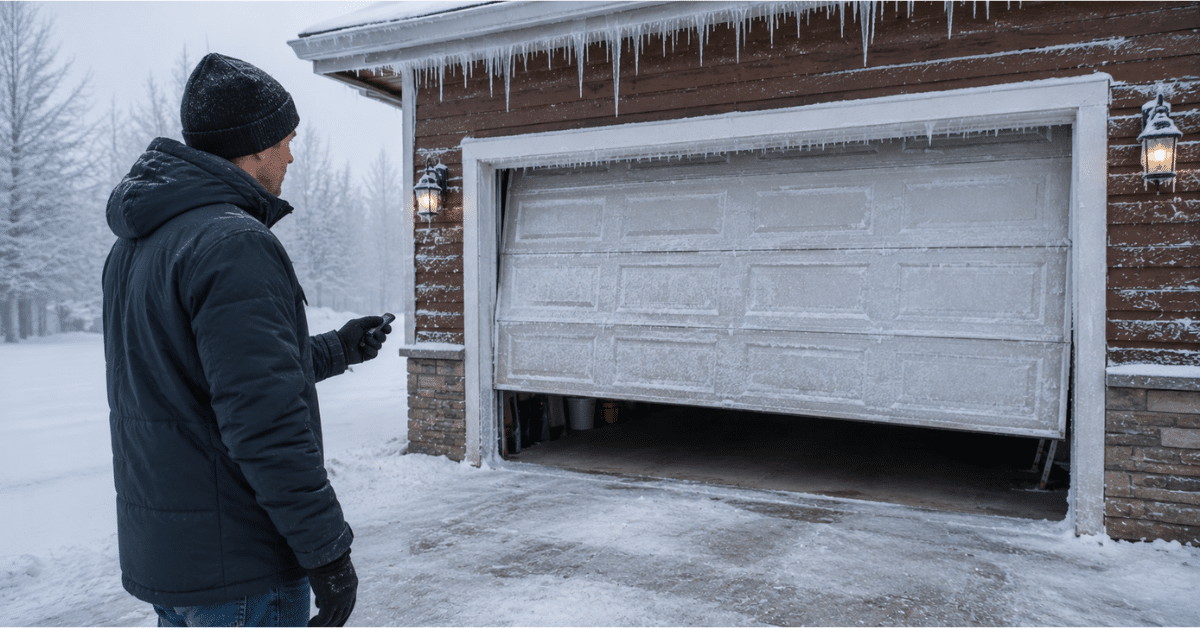
Winter mornings are already rough — and nothing makes them worse than a garage door won’t open in cold weather situation right when you need to leave. The frustrating part is that the door worked perfectly yesterday. Cold weather affects garage door systems in several specific ways that most homeowners never think about until it happens to them. Metal contracts, lubricants thicken, moisture freezes, and batteries weaken. Each of these produces a different symptom with a different fix. This guide covers every cause clearly and tells you exactly what to do about each one.
Why Cold Weather Makes Garage Doors Stop Working
Temperature drops don’t just feel brutal — they physically change the materials your garage door system is made of. Steel contracts in the cold, which shifts the alignment of panels, tracks, and hardware by small but significant amounts.
Lubricants inside rollers, hinges, and springs thicken in low temperatures and stop flowing properly. As a result, components that move smoothly in summer drag and bind in winter. Understanding this helps you diagnose the specific problem your door is facing right now.
Frozen Bottom Seal: The Most Common Cold Weather Culprit
The rubber bottom seal runs along the base of your garage door and presses against the floor when closed. When overnight temperatures drop below freezing, moisture between the seal and the concrete floor can freeze solid — bonding the door directly to the ground.
How to Tell If Your Seal Is Frozen
Press the opener button. If the motor runs and strains but the door doesn’t budge at all, a frozen seal is the most likely cause. You may also hear the opener motor laboring harder than usual before it trips the automatic reverse.
How to Fix It Safely
Never force the door open with the opener — you risk snapping the springs, burning out the motor, or tearing the seal. Instead, use a heat gun or hair dryer along the base of the door to melt the ice bond. A plastic scraper works for loose ice along the edges.
After freeing the door, apply a silicone-based lubricant to the bottom seal. This prevents it from bonding to the floor again the next night.
Cold-Stiffened Springs Struggling to Lift the Door
Garage door springs do the heavy lifting on every cycle. In cold weather, the steel in torsion and extension springs contracts and loses a measurable amount of tension. That tension loss makes the springs weaker — sometimes weak enough that the opener can no longer complete a full open cycle.
Signs Cold Springs Are the Problem
The door opens partway and then stops. The opener motor sounds like it’s working harder than normal. The door moves slowly and unevenly compared to warmer months.
What You Can Do
First, check the door’s balance. Disconnect the opener by pulling the red emergency release cord and manually lift the door to waist height. Release it. A balanced door stays in place — a door that drops or flies upward has springs that need professional attention.
Do not attempt to adjust or replace springs yourself. A torsion spring under full tension stores serious energy, and cold metal is more brittle than usual. This is a repair for a trained technician.
International Door Association — garage door spring safety guidelines
Thickened Lubricant Causing Stiff, Grinding Movement
Petroleum-based lubricants — the kind many homeowners apply without checking the label — get thick and gummy when temperatures drop. That gummy residue coats rollers, hinges, and tracks and creates drag that the opener struggles to overcome.
The Right Lubricant for Winter
Switch to a silicone-based or lithium-based spray lubricant rated for low temperatures. These stay fluid in the cold and don’t attract dirt and debris the way petroleum products do. Apply it to:
- Roller bearings (not the nylon wheel itself)
- All hinges along the door panels
- The torsion spring coils
- Bearing plates on each end of the spring rod
- The opener’s drive chain or belt
A fresh coat of the right lubricant before the first cold snap each year prevents most cold-weather stiffness issues entirely.
Garage Door Won’t Open in Cold Weather Due to Opener Problems
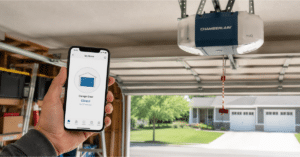
The opener itself can fail in cold weather for two reasons: a weakened battery or a motor that struggles to generate torque in low temperatures.
Remote and Keypad Battery Failure
Cold temperatures drain batteries faster than most people expect. A remote or wall keypad that works fine at 70°F may stop responding entirely at 25°F. Replace the remote batteries with fresh alkaline batteries before winter — and keep a spare set in your car.
If the wall button still operates the door but the remote doesn’t, the battery is almost certainly the issue. If neither works, the problem is the opener itself or the power supply.
Motor and Circuit Board Issues
Older opener motors lose efficiency in sustained cold. The circuit board — which controls timing, force limits, and safety functions — can also malfunction when temperatures inside an unheated garage drop below the board’s operating range.
If your opener is more than 10 years old and struggling every winter, replacement with a modern unit rated for a wider temperature range is a smarter investment than repeated service calls.
Contracted Metal Tracks Throwing Off Alignment
Steel tracks contract in cold weather, just like every other metal component. On a well-maintained door, this contraction is minor and causes no issues. However, on a door where the tracks are already slightly misaligned or the hardware is loose, cold-weather contraction pushes the system past its tolerance.
Signs of Track Misalignment in Winter
The door makes a scraping sound it didn’t make in summer. The door moves unevenly — one side rises faster than the other. The rollers visibly bind or jump in the track during operation.
Minor misalignment can sometimes be corrected by loosening the track mounting bolts, gently tapping the track back into position, and retightening. However, significant misalignment — or tracks that are bent or damaged — require a professional to fix correctly without causing further damage.
FAQ: Garage Door Won’t Open in Cold Weather
Q: Why does my garage door work fine in summer but not in winter?
A: Cold temperatures cause metal to contract, lubricants to thicken, and seals to freeze — all of which put extra strain on components that performed fine in warmer conditions.
Q: Can I pour hot water on a frozen garage door seal?
A: No — hot water refreezes quickly and makes the ice bond worse. Use a heat gun or hair dryer instead, and follow up with silicone lubricant to prevent it from refreezing.
Q: How do I stop my garage door seal from freezing to the ground?
A: Apply a silicone-based lubricant or a thin layer of WD-40 to the bottom seal and the floor contact area before overnight temperatures drop below freezing.
Q: Why does my garage door open halfway then stop in cold weather?
A: This usually points to cold-stiffened springs that have lost tension in the low temperatures. Have a technician inspect and adjust the spring balance before continuing to operate the door.
Q: Should I replace my garage door opener if it struggles every winter?
A: If the opener is more than 10 years old and consistently underperforms in cold weather, replacement is more cost-effective than repeated repairs on an aging unit.
Conclusion
A garage door that won’t open in cold weather is almost always traceable to one of five causes: a frozen bottom seal, stiff springs, thickened lubricant, a drained battery, or contracted metal tracks. Most of these have straightforward fixes you can handle before calling anyone. However, anything involving springs, track realignment, or an aging opener deserves professional attention — cold metal is less forgiving than warm metal, and the risks are real.
Get ahead of winter problems with a quick pre-season tune-up and the right lubricant. Your morning commute will thank you.