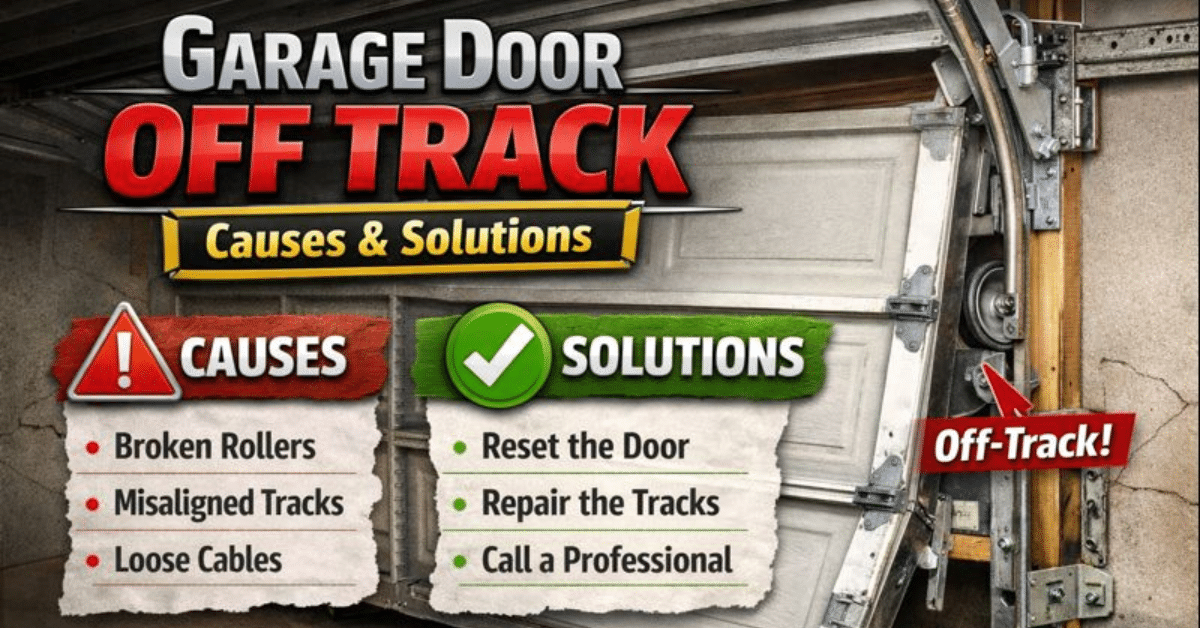
A garage door off track is one of the most alarming problems homeowners can face. One moment the door is working fine, and the next it’s crooked, jammed, or completely stuck. This issue is not only inconvenient but also dangerous if handled incorrectly. Because garage doors are heavy and operate under tension, even a small misalignment can turn into a serious safety risk.
Understanding why a garage door comes off track and knowing the right solutions can help you act quickly and prevent further damage. In this guide, we’ll explain the most common causes, warning signs, and professional solutions for an off-track garage door in a clear, easy-to-understand way.
What Does “Garage Door Off Track” Mean?
When a garage door is described as being “off track,” it means the rollers have slipped out of the metal tracks that guide the door up and down. These tracks are designed to keep the door aligned and balanced during operation. Once the rollers leave the track, the door can tilt, jam, or collapse unevenly.
A garage door off track is not something to ignore. Continuing to use the door in this condition can damage panels, cables, springs, and even the opener.
Common Causes of a Garage Door Off Track
Understanding the root cause helps determine the safest and most effective solution.
Impact or Accidental Collision
One of the most common reasons a garage door off track issue occurs is impact. Backing a vehicle into a partially closed door or hitting the track with heavy equipment can knock the rollers out of alignment.
Even a small collision can bend the track just enough to cause the rollers to slip out during operation.
Broken or Worn Rollers
Garage door rollers allow the door to move smoothly along the tracks. Over time, rollers can wear out, crack, or break due to age and repeated use.
When rollers become damaged, they may jump the track, causing the garage door to shift or become stuck at an angle.
Loose or Bent Tracks
Garage door tracks must remain straight and securely fastened to support the door’s movement. Vibrations, temperature changes, or poor installation can cause tracks to loosen or bend.
Once the track loses alignment, the door can no longer move evenly, increasing the risk of the door going off track.
Cable Problems
Lift cables play a critical role in keeping the garage door balanced. If one cable becomes frayed, loose, or snapped, the door may lift unevenly.
This uneven tension often pulls one side of the door off track while the other side continues moving.
Obstructions in the Track
Small objects, dirt buildup, or debris inside the track can block the rollers. When the door tries to move past the obstruction, the rollers may pop out of the track.
Regular inspections help prevent this issue before it leads to bigger problems.
Warning Signs Your Garage Door Is Going Off Track
Catching the problem early can prevent costly repairs.
Door Looks Crooked or Uneven: If one side of the door appears higher than the other, this is a strong sign the garage door is off track or heading that way.
Grinding or Scraping Noises: Unusual sounds during operation often indicate the rollers are not moving smoothly within the tracks.
Door Gets Stuck While Opening or Closing: A garage door off track may stop suddenly or refuse to move past a certain point.
Visible Gaps Between Rollers and Track: If you can see rollers sitting outside the track, stop using the door immediately.
Why a Garage Door Off Track Is Dangerous
A garage door can weigh hundreds of pounds. When it’s off track, the door loses its balance and can fall unexpectedly.
Trying to force the door open or closed can:
- Cause serious injury
- Damage door panels
- Break cables or springs
- Burn out the garage door opener
For safety reasons, off-track garage doors should be handled by trained professionals.
Professional Solutions for a Garage Door Off Track
Track Realignment and Repair: If the track is only slightly bent or misaligned, technicians can carefully straighten and secure it back into position. This restores smooth movement and prevents rollers from slipping out again.
Roller Replacement: Worn or broken rollers are replaced with new, high-quality rollers designed for durability and quiet operation. This solution improves performance and extends the lifespan of the garage door system.
Cable Repair or Replacement: When cables are damaged, professionals replace them and rebalance the door to ensure even lifting on both sides. This step is essential for preventing future off-track issues.
Full Safety Inspection: After fixing a garage door off track issue, technicians perform a full system check. This includes inspecting springs, tracks, rollers, hinges, and the opener to confirm safe operation.
Can You Fix a Garage Door Off Track Yourself?
Minor issues, such as clearing visible debris from the track, may be safe to handle. However, attempting to realign a door or handle cables and rollers without proper tools and training is risky.
Because garage doors operate under high tension, DIY repairs often lead to further damage or injury. Professional repair is always the safest choice.
How to Prevent a Garage Door from Going Off Track
Prevention is easier and more affordable than emergency repairs.
- Regular maintenance helps identify worn rollers, loose bolts, and alignment issues before they cause a garage door off track situation.
- Avoid hitting the door with vehicles or equipment, keep tracks clean, and schedule professional inspections to keep the system running smoothly.
Frequently Asked Questions (FAQ)
Q: What should I do if my garage door goes off track?
A: Stop using the door immediately and contact a professional garage door technician to prevent further damage or injury.
Q: Can an off-track garage door damage the opener?
A: Yes. Operating a garage door off track puts excessive strain on the opener and can cause motor failure.
Q: How long does it take to fix a garage door off track?
A: Most professional repairs can be completed within one to two hours, depending on the severity of the issue.
Q: Is a garage door off track considered an emergency?
A: Yes. Because of safety risks, an off-track garage door should be repaired as soon as possible.
Conclusion
A garage door off track is more than just an inconvenience—it’s a serious safety concern that requires prompt attention. Whether caused by impact, worn rollers, cable issues, or track misalignment, addressing the problem early can prevent costly damage and ensure safe operation.
Professional repair restores balance, protects your property, and keeps your garage door working smoothly for years to come. If you notice warning signs, acting quickly is the best way to avoid bigger problems down the road.