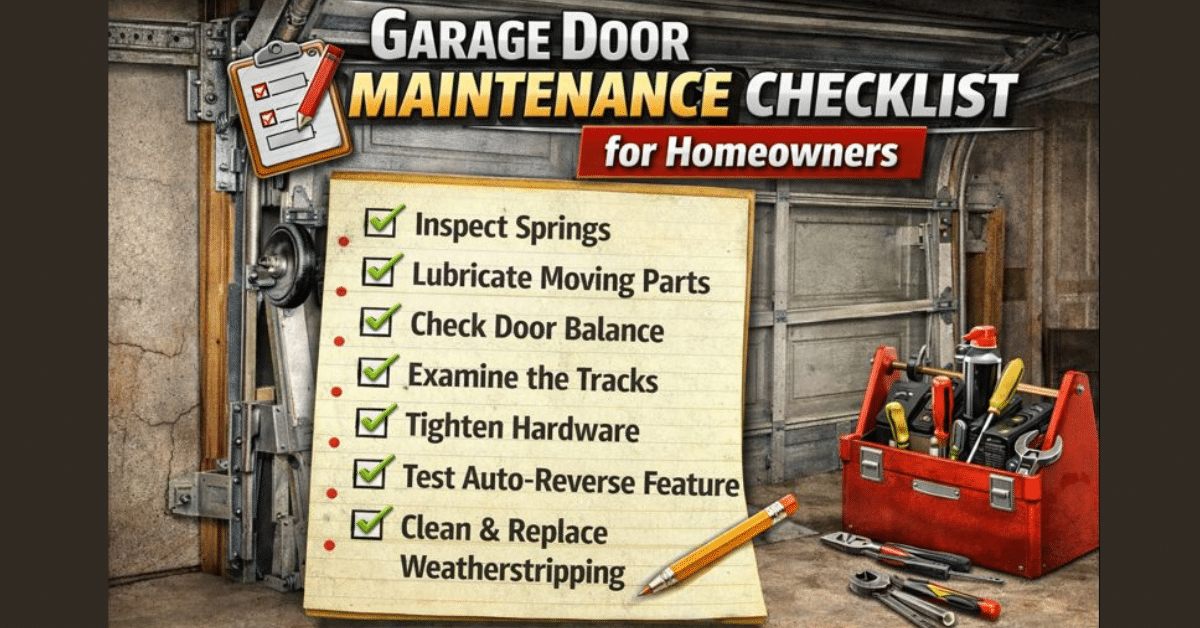
A garage door is one of the most used moving parts of a home, yet it is often overlooked until something goes wrong. Regular care is essential because a neglected garage door can lead to sudden breakdowns, safety risks, and expensive repairs. That is why following a garage door maintenance checklist for homeowners is one of the smartest steps you can take to protect your investment.
With proper maintenance, homeowners can extend the life of their garage door, improve daily performance, and reduce the chances of emergency repairs. This guide explains what to check, how often to inspect, and when it is best to call a professional.
Why Garage Door Maintenance Matters
A garage door operates under tension and carries significant weight. Over time, normal wear affects rollers, tracks, springs, and cables. Without routine checks, small issues can quickly turn into major problems.
Following a garage door maintenance checklist for homeowners helps ensure safe operation, smooth movement, and consistent performance throughout the year. It also helps identify early warning signs before they cause damage.
Garage Door Maintenance Checklist for Homeowners: Monthly Tasks
Monthly inspections focus on visible and audible signs that indicate wear or misalignment.
Visual Inspection of Door Panels
Start by looking closely at the garage door panels. Cracks, dents, or rust spots may affect structural strength. Steel doors should be checked for corrosion, while wooden doors should be examined for warping or moisture damage.
Check Rollers and Hinges
Rollers and hinges allow smooth door movement. Worn or cracked rollers may cause noise and uneven motion. If rollers appear damaged, replacement should be scheduled promptly. Including this step prevents track damage and sudden failures.
Inspect Tracks for Alignment
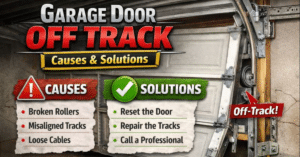
Garage door tracks must remain straight and secure. Look for bends, gaps, or loose mounting brackets. Misaligned tracks can cause the door to bind or go off track.
Lubrication Guide
Proper lubrication reduces friction and extends component life.
Lubricate Moving Parts: Apply garage-door-specific lubricant to rollers, hinges, bearings, and springs. Avoid heavy grease, as it attracts dirt and debris. Smooth operation is a clear sign that your garage door maintenance checklist for homeowners is working effectively.
Avoid Lubricating Tracks: Tracks should remain clean but not greasy. Lubrication can cause rollers to slip instead of roll, leading to alignment issues.
Safety Checks
Safety checks are critical, especially for homes with children or pets.
Test the Auto-Reverse Function: Place an object under the door and close it. The door should reverse immediately upon contact. Failure indicates a safety risk that requires professional attention.
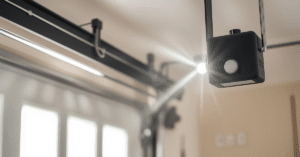
Test Photo-Eye Sensors: Clean the sensors and ensure they are aligned properly. Misaligned sensors may prevent the door from closing or cause sudden reversals.
Balance Test
A properly balanced garage door reduces strain on the opener.
How to Check Door Balance: Disconnect the opener and manually lift the door halfway. A balanced door should stay in place. If it falls or rises, spring tension may be incorrect. Spring adjustments should always be handled by professionals due to safety risks.
Seasonal Garage Door Maintenance Tips
Weather changes affect garage door performance.
Winter Maintenance: Cold temperatures can cause metal parts to contract. Lubrication and seal inspection help prevent stiffness and heat loss.
Summer Maintenance: Heat can expand metal components and increase friction. Cleaning tracks and checking opener sensitivity is recommended.
Including seasonal steps in your garage door maintenance checklist for homeowners ensures year-round reliability.
Hardware Tightening
Garage doors vibrate during operation, which can loosen hardware over time.
Check and tighten:
- Roller brackets
- Track bolts
- Hinge screws
Secure hardware keeps the system stable and reduces noise.
Signs That Maintenance Is No Longer Enough
While routine care prevents many issues, some signs indicate professional service is needed.
Common warning signs include:
- Loud grinding or scraping sounds
- Uneven door movement
- Frayed cables
- Frequent opener strain
Ignoring these signs can lead to sudden breakdowns.
When to Call a Professional Technician
Some garage door components operate under extreme tension. Springs, cables, and track realignment should always be handled by trained technicians. A professional inspection complements your garage door maintenance checklist for homeowners and ensures all safety standards are met.
How Regular Maintenance Saves Money
Routine maintenance reduces repair costs by identifying problems early. It also extends the life of major components, delaying full replacement. Homeowners who follow a structured maintenance checklist often avoid emergency repairs and enjoy smoother operation year-round.
Garage Door Maintenance Checklist for Homeowners: Long-Term Benefits
Consistent maintenance provides:
- Improved safety
- Quieter operation
- Better energy efficiency
- Extended system lifespan
- Higher home value
These benefits make garage door maintenance a worthwhile investment.
Frequently Asked Questions (FAQ)
Q: How often should homeowners maintain their garage door?
A: Basic inspections should be done monthly, while professional servicing is recommended once a year.
Q: Can homeowners perform garage door maintenance themselves?
A: Visual checks, cleaning, and lubrication are safe for homeowners. Spring and cable repairs require professional service.
Q: Why is garage door balance important?
A: Proper balance reduces strain on the opener and prevents uneven wear on components.
Q: What happens if garage door maintenance is ignored?
A: Neglect can lead to safety hazards, costly repairs, and shortened door lifespan.
Conclusion
A garage door maintenance checklist for homeowners is essential for keeping your garage door safe, reliable, and efficient. With regular inspections, lubrication, and safety checks, homeowners can prevent unexpected failures and extend the life of their garage door system.
By following this checklist and scheduling professional inspections when needed, you ensure smooth operation and peace of mind throughout the year.